
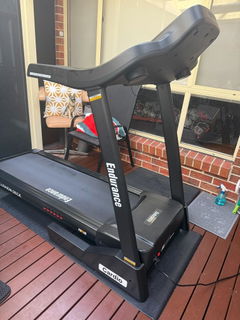
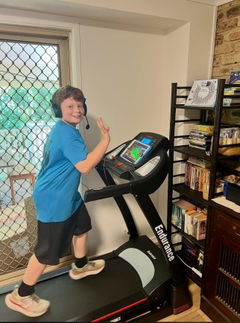
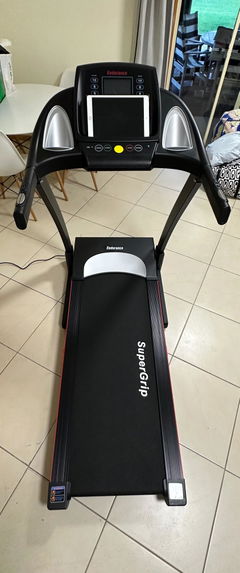
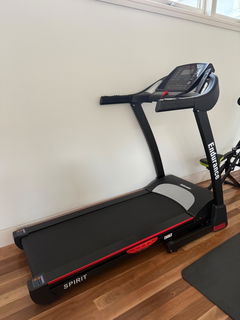
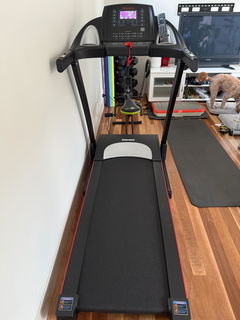
Overall I’m pretty happy with my new treadmill, however I think the water bottle holders could be a little deeper as my bottle rattles and shakes when I’m walking. Also I get zapped by the heart rate metal strips when I get on, so I need to cover them with hand towels.
Easy to set up and start. Great array of features. A good device for the whole family.
Application of silicon oil is a little tricky and could be improved to ensure appropriate distribution.
An option for the management of bluetooth connections on the treadmill could be a useful update.
Hi Jo, thank you for your thoughtful review! We're glad you find the treadmill easy to use and suitable for the whole family. Below is a good you tube video which shows you how to easily apply the silicone lube under the belt
https://www.youtube.com/watch?v=Sg8Egnpfh2E
Thanks for choosing Endurance Treadmills!
Thanks for facilitating the swap of my initial booking Treadmill for a better one for the same price. It was great dealing with your team. Prompt response.
Got it on Time . In use. Endurance Spirit. Great Product. Thank you. Bejoy
Hi Bejoy, thank you so much for your wonderful review! We're thrilled to hear you're enjoying your treadmill and appreciated our service. If you ever need anything else, we're here to help. Enjoy your workouts!